

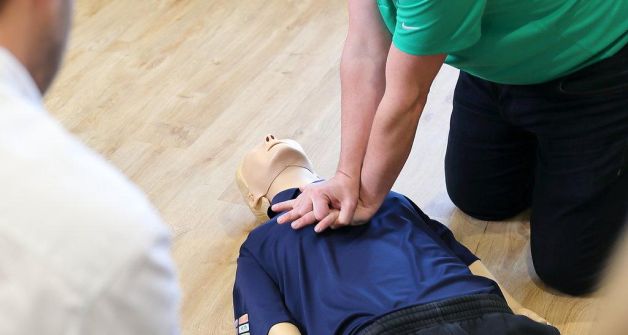
New Year is as good a time as any for organisations to think about training requirements. All employers have a legal duty for making sure that the employees receive immediate attention if they are injured or taken ill at work. Accidents and illness can happen at any time and first aid can save lives and prevent minor injuries from becoming major ones.

An employer should make an assessment of first-aid needs appropriate to the circumstances (hazards and risks) of each workplace. The aim of first aid is to reduce the effects of injury or illness suffered at work, whether caused by the work itself or not. First-aid provision must be ‘adequate and appropriate in the circumstances’. This means that sufficient first-aid equipment, facilities and personnel should be available at all times, taking account of alternative working patterns, to:
- give immediate assistance to casualties with both common injuries or illnesses and those likely to arise from specific hazards at work;
- summon an ambulance or other professional help.
Where an employer provides first-aiders in the workplace, they should ensure they have undertaken suitable training, have an appropriate first-aid qualification and remain competent to perform their role. Typically, first-aiders will hold a valid certificate of competence in either first aid at work (FAW) or emergency first aid at work (EFAW). EFAW training enables a first-aider to give emergency first aid to someone who is injured or becomes ill while at work. FAW training includes EFAW and also equips the first-aider to apply first aid to a range of specific injuries and illnesses
If an employer, after carrying out a needs assessment, decides a first-aider is not required in the workplace, a person should be appointed to take charge of the first-aid arrangements. The role of this appointed person includes looking after the first-aid equipment and facilities and calling the emergency services when required
As from 1st January 2017 workplace first aid training must include an additional element. Automated External Defibrillator or AED training is now a requirement for providers who supply first aid training to staff in the workplace. This makes sense. AED’s are a really helpful portable device that can save lives so the more people that know how to use them, the more lives that can be saved.
An automated external defibrillator (AED) is a portable device that checks the heart rhythm and can send an electric shock to the heart to try to restore a normal rhythm. AEDs are used to treat sudden cardiac arrest (SCA). SCA is a condition in which the heart suddenly and unexpectedly stops beating. When this happens, blood stops flowing to the brain and other vital organs. SCA usually causes death if it's not treated within minutes. In fact, each minute of SCA leads to a 10 percent reduction in survival. Using an AED on a person who is having SCA may save the person's life
AED’s are very successful in improving survival rates from sudden cardiac arrest. When use of them is combined with Cardio Pulmonary Resuscitation or CPR training they are even more successful. Ensuring that some of your staff are trained in the use of this device and in CPR is obviously of great benefit. AEDs are becoming a familiar sight and are often stored in prominent locations so they are easy to find in an emergency situation. You may already have them at your organisation. If you are interested in obtaining them we can supply them for you.
This year, if your staff are due Workplace First Aid Training our team will ensure that the training we deliver will incorporate AED training, giving you and your people peace of mind.
If you would like more details about our full range of First Aid at Work Training please contact us on 01543 372888



Children's Mental Health Week: How to Support a Child or Young Person with Their Mental Health
12th February 2026: Learn how to support a child’s mental health, spot warning signs, start conversations, and know when to escalate concerns during Children’s Mental Health Week.
Read More

Concussion First Aid: Concussion Symptoms, Treatment & Recovery Tips
28th October 2025: Discover how to provide concussion first aid, identify symptoms early, and follow key treatment and recovery tips for a safe outcome.
Read More
.png)
Choking First Aid: What to Do If Someone Is Choking
23rd October 2025: Learn what to do if someone is choking. Follow our step-by-step first aid guide for adults, children, and babies — and know when to call for help.
Read More