

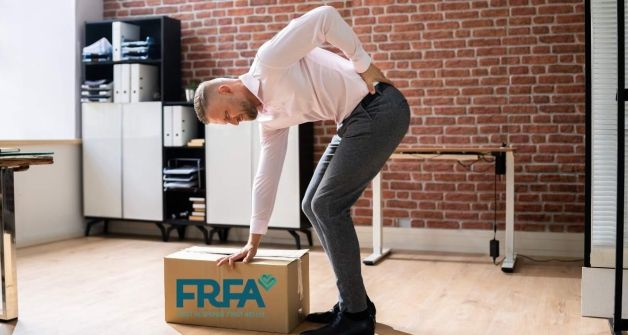
At First Response First Aid Ltd, we've witnessed how the right training can make all the difference. Let's take a closer look at what you need to know when it comes to manual handling training.
What Is Manual Handling?
Manual handling refers to any activity that involves lifting, carrying, pushing, pulling, or moving objects without equipment or machine. Many people assume manual handling isn't a part of their job if they're outside of the stereotypical industries, such as construction or warehousing, but manual handling is often a part of everyday life for most workers in the UK. From lifting boxes of files in the office storeroom, to moving desks in a classroom, manual handling is a routine part of work for many of us. That is why learning how to move correctly is so important, as incorrect movement can lead to serious injuries, such as strains, sprains and long term muscoskeletal disorders.
Why Learn About Manual Handling?
Knowing the best manual handling practices is all about staff wellbeing, and keeping your business running smoothly. For example, Lisa from Finance tries to move a heavy filing cabinet on her own. As a result, Lisa is off work for several weeks with a bad back, leaving you short-staffed. Manual handling is about lifting heavy things; but it also includes any task involving moving, or supporting a load, using your body. This could be lifting, lowering, pushing, pulling, or carrying. Get it wrong, and you're looking at potential injuries, lost work days, and a reduction in company productivity. Get it right, and you've got a safer, happier, and more efficient workplace.
What's Legally Required in the UK?
Although it may not be the most interesting of topics, businesses legal requirements are important to know thoroughly to ensure all employees and employers are protected. UK businesses are legally obliged to provide manual handling training if your employees engage in the kinds of tasks mentioned above. It's all laid out in the Manual Handling Operations Regulations 1992. The Health and Safety at Work Act 1974 also comes into play here. It states you need to ensure your employees' health, safety, and welfare, which includes giving them the right information, instruction, and training to keep themselves and other safe in the workplace. Ignore this, and you could be facing hefty fines or even legal action.
The Principles of Safe Manual Handling
Safe manual handling starts with good preparation and an awareness of your body’s limits. Before lifting or moving anything, take a moment to assess the load, the environment, and whether you need help or equipment. Planning ahead reduces the risk of sudden strain or awkward movements.
When lifting, always position your feet shoulder-width apart for stability and keep the load close to your body. Bend at the hips and knees, not the back, to maintain a strong, natural posture. Avoid twisting while carrying; instead, turn your whole body by moving your feet. If the load is too heavy, bulky, or difficult to grip, use mechanical aids or ask a colleague to help. Once you begin the lift, move smoothly and steadily. Sudden jerks can cause injury, even with lighter loads. Set the object down safely by reversing the original technique keeping your back straight and using your legs to control the movement.
By following these core principles, employees can significantly reduce the risk of injury and feel more confident when handling tasks that involve physical effort.
What Makes a Good Manual Handling Course?
At First Response First Aid, all of our manual handling courses cover the essentials of manual handling, and go above to ensure safety in the workplace:
- Risk Assessment: Guidance on spotting potential hazards before they become problems
- Proper Lifting Techniques: Learning to use the right muscles in the right way
- Using Mechanical Aids: Recognising when to use equipment to do the heavy lifting
- Team Lifting: For those times when two (or more) people move anything as a team
- Ergonomics: Awareness of how to sit, stand, and move properly
- Industry-Specific Stuff: Knowledge of what works best for the environment you’re in
With these essentials covered, you’ll ensure your teams know the basics about keeping themselves safe when moving anything in the workplace, as well as compliance with regulations.
When you're choosing a manual handling course for your teams, keep an eye out for:
- Accreditation: A reputable and trusted provider (like First Response First Aid Ltd)
- Customisation: Courses that can be tailored to your specific needs (FRFA can tailor courses to your company requirements)
- Hands-on Practice: A good balance of theoretical and practical learning
- Experienced Trainers: A provider with expert trainers with the skills to back up their credentials
- Flexible Training: Delivery that’s convenient to your business – for example, the choice between full-day courses or shorter sessions; on-site or at our premises, etc.
- Ongoing Support: Availability of customer service and any help you may need
What's In It for You and Your Team?
Investing in high-quality manual handling training is a win for everyone. Your team gains the confidence and practical know-how to work safely, reducing the likelihood of injuries and creating a more positive, secure working environment. For your business, that means consistent productivity, fewer disruptions, and the reassurance that you’re actively protecting your workforce. It also strengthens your reputation as an employer who genuinely prioritises safety and employee wellbeing.
Frequently Asked Manual Handling Questions
Here are some of the questions we get asked the most by businesses like yours:
Q: Is manual handling training really required by law in the UK?
A: Yes. It's not optional if your employees do this kind of work.
Q: How often do we need to redo the manual handling training?
A: There's no hard and fast rule, but every 1-3 years, a manual handling refresher course is suggested - sooner if you change how you work or get new equipment.
Q: What happens if we don't provide the training?
A: You could potentially be looking at injuries, legal trouble, fines, and a damaged reputation.
Q: Can we do the training in-house at our place of work?
A: Absolutely! We're more than happy to come to you.
Q: How long does it take?
A: Most basic courses take 2-4 hours. More in-depth bespoke training courses might be a full day or more.
Your First Step Towards a Safer Workforce
While manual handling training might not be the most thrilling part of running a business, it's crucial for keeping your team safe and your business booming. First Response First Aid Ltd is here to make it as painless (and as enjoyable) as possible. Give us a call to see how we can help. Or, go online and book on our website. After all, a safe workplace is a happy workplace.
Get in touch with our team to book in your manual handling course. We look forward to working with you, and to ensuring the safety of your team members.



Children's Mental Health Week: How to Support a Child or Young Person with Their Mental Health
12th February 2026: Learn how to support a child’s mental health, spot warning signs, start conversations, and know when to escalate concerns during Children’s Mental Health Week.
Read More

Concussion First Aid: Concussion Symptoms, Treatment & Recovery Tips
28th October 2025: Discover how to provide concussion first aid, identify symptoms early, and follow key treatment and recovery tips for a safe outcome.
Read More
.png)
Choking First Aid: What to Do If Someone Is Choking
23rd October 2025: Learn what to do if someone is choking. Follow our step-by-step first aid guide for adults, children, and babies — and know when to call for help.
Read More