

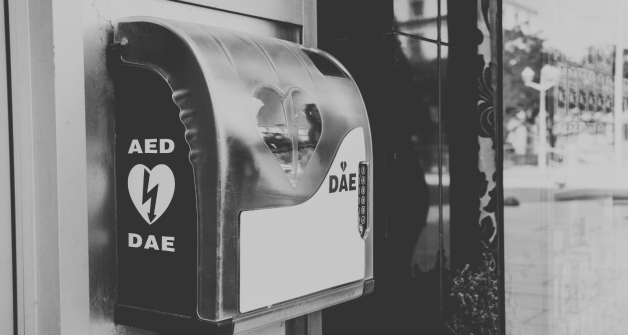
This article explains what a defibrillator is, how it works, and when it should be used in cases of sudden cardiac arrest. It covers the different types of defibrillators, highlights why speed and CPR are crucial, and shows where these life-saving devices can typically be found. The guide also stresses the value of first aid training in building the skills and confidence needed to act quickly in an emergency.
Introduction
When someone suffers a sudden cardiac arrest, every second counts. In those crucial moments, a defibrillator can make the difference between life and death. You have probably seen them in workplaces, schools, gyms, or even at the supermarket – but what exactly do they do, and how do they work?
In this blog, we’ll break down what a defibrillator is, the different types available, how it works, and when you should use one. We’ll also explain why it goes hand-in-hand with CPR and where you’re most likely to find one in an emergency.
What Is a Defibrillator?
A defibrillator is a medical device that delivers an electric shock to the heart. Its main purpose is to correct life-threatening irregular heart rhythms, such as ventricular fibrillation or pulseless ventricular tachycardia.
It’s a common misconception that defibrillators “restart” a heart that has completely stopped. Instead, the shock momentarily stops the chaotic rhythm, giving the heart a chance to reset itself.
Most public defibrillators, often called Automated External Defibrillators (AEDs), are designed to be simple to use, even if you’ve never used one before. The machine speaks to the user and takes them through step-by-step instructions to ensure effective use
Types of Defibrillators
Not all defibrillators are the same. While they all serve the same purpose – restoring a normal heart rhythm – there are a few different types designed for different situations:
Automated External Defibrillator (AED) - These defibrillators are the most common type and are the ones you’ll see in public spaces such as gyms, airports, supermarkets and schools. AEDs are designed for anybody to use, even without first aid training
Manual Defibrillator - This type is most commonly found in hospitals or with paramedics. Manual defibrillators require professional training to use and are not for public use.
Implantable Cardioverter Defibrillator (ICD) - An ICD is a small device fitted inside a patient’s chest. It constantly monitors the heart and automatically delivers a shock if needed.
How Does a Defibrillator Work?
A defibrillator works by delivering a carefully controlled electric shock through the chest and into the heart. To understand why this is needed, it helps to know a little about how the heart functions. The heart’s pumping action is driven by electrical signals that travel in an organised pattern, making the chambers contract in rhythm and circulate blood around the body.
In cases of sudden cardiac arrest, these signals become disrupted. Instead of beating normally, the heart may begin to quiver in a disorganised way, known as ventricular fibrillation, or beat so fast that it can no longer pump blood effectively, known as ventricular tachycardia. In both cases, the result is that blood flow to the brain and vital organs stops almost immediately.
The role of the defibrillator is to interrupt this chaotic electrical activity. The shock it delivers momentarily stops the abnormal signals, essentially resetting the electrical system of the heart. Once the disordered rhythm has been halted, the heart’s natural pacemaker – the sinoatrial node – can take back control and restart a steady, coordinated beat.
It’s important to understand that a defibrillator doesn’t “restart” a heart that has completely stopped. Instead, it gives a heart in chaos the chance to reset itself and return to a normal rhythm. In practice, when an Automated External Defibrillator (AED) is used, it also guides the rescuer step by step – analysing the heart rhythm, advising if a shock is needed, and prompting when to continue CPR.
Summary: AED is used, it guides the rescuer step by step – analysing the heart rhythm, advising if a shock is needed, and prompting when to continue CPR
When Should You Use a Defibrillator?
A defibrillator should only be used in cases of sudden cardiac arrest (SCA). Here’s what to do:
- Check responsiveness and breathing – call emergency services immediately.
- Start CPR
- Use the defibrillator as soon as it arrives – follow the prompts
- Continue CPR between shocks until professionals arrive.
Why speed matters: For every minute without defibrillation and CPR, the chance of survival drops by about 10%.
If you’d like more confidence in handling these emergencies, our Emergency First Aid at Work course is a brilliant starting point.
Where Can You Find Defibrillators?
Defibrillators are becoming increasingly common in public spaces, making it easier for bystanders to act quickly in an emergency. You’ll often find Automated External Defibrillators (AEDs) in airports, train stations, shopping centres, gyms, schools, and workplaces. Many sports grounds, community centres, and large event venues also keep them on hand. They are usually housed in clearly marked cabinets or cases, often in bright green or yellow, so they are easy to spot in a crisis.
Even if a defibrillator isn’t immediately visible, emergency services can often guide you to the nearest one when you call. Many towns and cities are creating public AED registries, which map out the locations of these life-saving devices. Familiarising yourself with where they are in places you frequent can make a critical difference if someone nearby suffers a sudden cardiac arrest.
If you’re curious where the nearest defibrillator is to you, check out DefibFinder and put in your postcode to see what's local to you. In an emergency, call 999 and they will advise you with the best place to get one, rather than using this app. If you’re in a workplace setting, it’s worth checking your first aid kits and supplies and ensuring staff have access to workplace training
Training is delivered across the UK, including Gloucestershire, Suffolk, and many other regions.
Defibrillator and CPR: Working Together
While a defibrillator is a powerful tool, it works best when combined with CPR. CPR (cardiopulmonary resuscitation) helps keep blood flowing to the brain and other vital organs while the heart is in a dangerous rhythm or waiting to be shocked. Even the fastest defibrillator can’t replace the importance of chest compressions and rescue breaths in those first critical minutes.The combination of immediate CPR and timely defibrillation dramatically increases a person’s chance of survival compared to either action alone.
If you’re not confident in your CPR skills, it’s a good idea to refresh your knowledge. You can learn the steps and techniques in detail in our guide on how to do CPR, which explains the procedure in an easy-to-follow way.
Conclusion
Defibrillators are life-saving devices that can make all the difference during a sudden cardiac arrest. Knowing how they work, when to use them, and how they complement CPR can help you act quickly and confidently in an emergncy. while AEDs are designed for public use, understanding the proper techniques and practicing them in a safe environment can greatly improve outcomes.
To gain hands on experience and build condience using a defibrillator alongside CPR, consider taking one of our Emergency First Aid at Work courses. Our courses are practical, engaging, and tailored to real-life situations, giving you the skills to respond effectively in emergencies. Whether you’re in a workplace, school, or community setting, learning these essential first aid techniques could help you save a life
Check our testimonials to see how others found the training, and visit our FAQs if you’ve got questions before booking.
Our training venues are spread across the Midlands and beyond, and you can always read more about us or the latest news and accreditations to see why thousands of learners trust us each year.



Children's Mental Health Week: How to Support a Child or Young Person with Their Mental Health
12th February 2026: Learn how to support a child’s mental health, spot warning signs, start conversations, and know when to escalate concerns during Children’s Mental Health Week.
Read More

Concussion First Aid: Concussion Symptoms, Treatment & Recovery Tips
28th October 2025: Discover how to provide concussion first aid, identify symptoms early, and follow key treatment and recovery tips for a safe outcome.
Read More
.png)
Choking First Aid: What to Do If Someone Is Choking
23rd October 2025: Learn what to do if someone is choking. Follow our step-by-step first aid guide for adults, children, and babies — and know when to call for help.
Read More